PERU
We work in the Andean Amazon biodiversity hotspot with local communities that manage Conservation Concessions, primarily in the San Martín region. In these resource-constrained areas, facing growing threats from the expansion of the agricultural frontier, we support the establishment of partnerships with researchers to strengthen conservation efforts through biodiversity inventories, the development of conservation plans, and the creation of ecotourism and educational programs that highlight the region’s unique and threatened biodiversity.
Our offices and local team are located in Moyobamba, the capital of the San Martín region.
KEY FIGURES
.jpg)
10
Community-led conservation areas partnering with NCA
.jpg)
+150
community members involved in fieldwork and biodiversity monitoring

20000 ha
conserved by local communities
+600

people trained in biodiversity monitoring, conservation and coexistence with fauna

+1300
species documetned during participatory biodiversity inventories

+850
children and students trained in our education programs
UNIQUE AND THREATENED SPECIES
Swamp forests, peatlands, lagoons, mountain streams, and high-altitude cloud forests are all unique ecosystems that our local community partners actively protect, providing an invaluable refuge for unique and endangered species—a natural and cultural heritage of the Andean Amazon.
Here are some of them:


Summer's poison frog
Ranitomeya summersi
Glass frog
Nymphargus chancas
WHY THE PERUVIAN ANDEAN AMAZON?
Unique, endemic, and threatened biodiversity. Increasing deforestation linked to the expansion of agricultural land (cattle, coffee, cocoa). Communities organized to conserve biodiversity and manage their territories. All of these factors make the local context a setting where the partnerships forged by Nature Conserv’Action enable scientific research to strengthen the conservation efforts led by local communities.

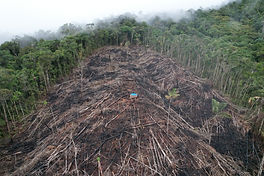

RAMPANT DEFORESTATION
Human migration from the Andes to the Amazon and the expansion of the agricultural frontier have made the forests of the San Martín region one of the most threatened in Peru: coffee and cocoa plantations, as well as cattle pastures, are replacing and fragmenting ecosystems that are unique in the world.
COMMUNITIES COMMITTED TO CONSERVATION INTHEIR TERRITORIES
In the face of deforestation, local communities have organized themselves to protect their forests and their natural and cultural heritage: sources of water, medicinal plants, game for traditional hunting, as well as ancestral knowledge and beliefs.
By managing their own Conservation Concessions, these communities become the stewards of their territories.
However, they lack resources, visibility, and recognition. They seek technical and scientific support to develop their projects, generate income, and ensure the sustainability of their conservation areas.


RESEARCH TO SUPPORT COMMUNITY-LED CONSERVATION
Through the efforts of Nature Conserv’Action, a new generation of researchers is working alongside communities to strengthen their projects and contribute to the conservation of the unique ecosystems of the Andean Amazon!


OUR ACTIONS
Community-based inventories & capacity building
StrengthenIing the involvement of local communities in monitoring and managing their biodiversity.
Scientific research
Describing new species, studying local biodiversity, and connect a new generation of researchers with communities.
Conservation plans
Developping and implementing concrete measures to protect ecosystems and endangered species.
Sustainable agriculture and ecotourism
Supporting economic alternatives based on scientific and community-based ecotourism and agricultural production that respects biodiversity.
Education and outreach
Promoting local biodiversity in school curricula and passing on this knowledge to younger generations.


We are grateful for the support of our financial partners
Our work is possible thanks to these organizations.
If you want to invest in sustainable biodiversity conservation, please contact us!


Explore our local community partners, technical and academic partners